The master plan for Ho Chi Minh City for the 2025–2050 period, with a 100-year vision, serves as a crucial foundation for reorganizing the city’s development space following the consolidation of its administrative boundaries.
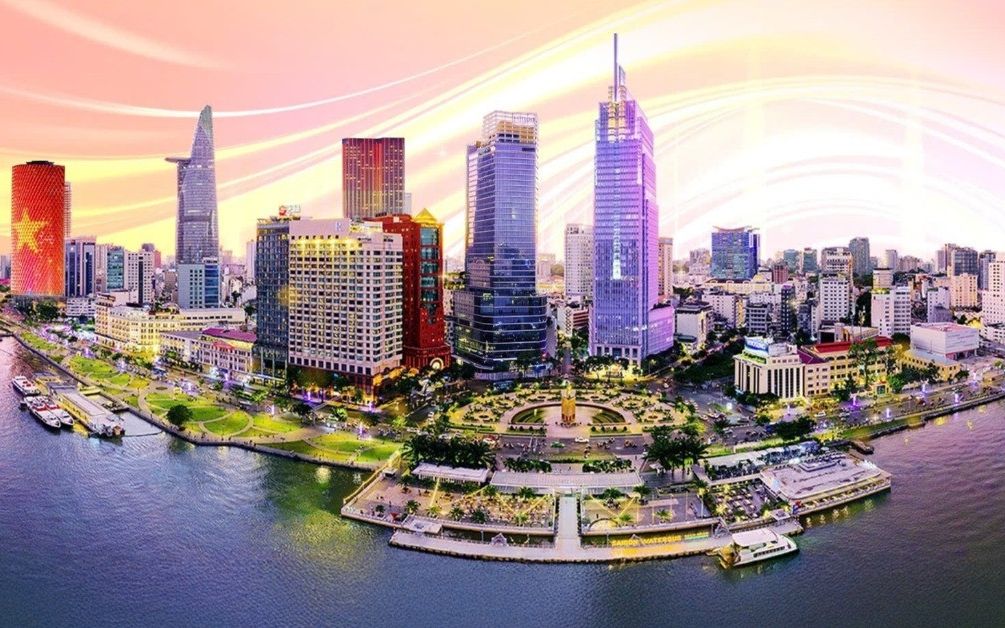
Photo: Department of Tourism
According to the development plan, Ho Chi Minh City is set to evolve into a multi-polar, multi-centered megalopolis, comprising five dynamic growth poles, five strategic linkage systems, five satellite hubs, and ten development management zones.
The master plan encompasses the entire administrative territory of the city, covering an area of approximately 6,772.59 km² and comprising 168 administrative units. The population is projected to reach approximately 18 million by 2030, 25 million by 2045, and over 27 million by 2050.
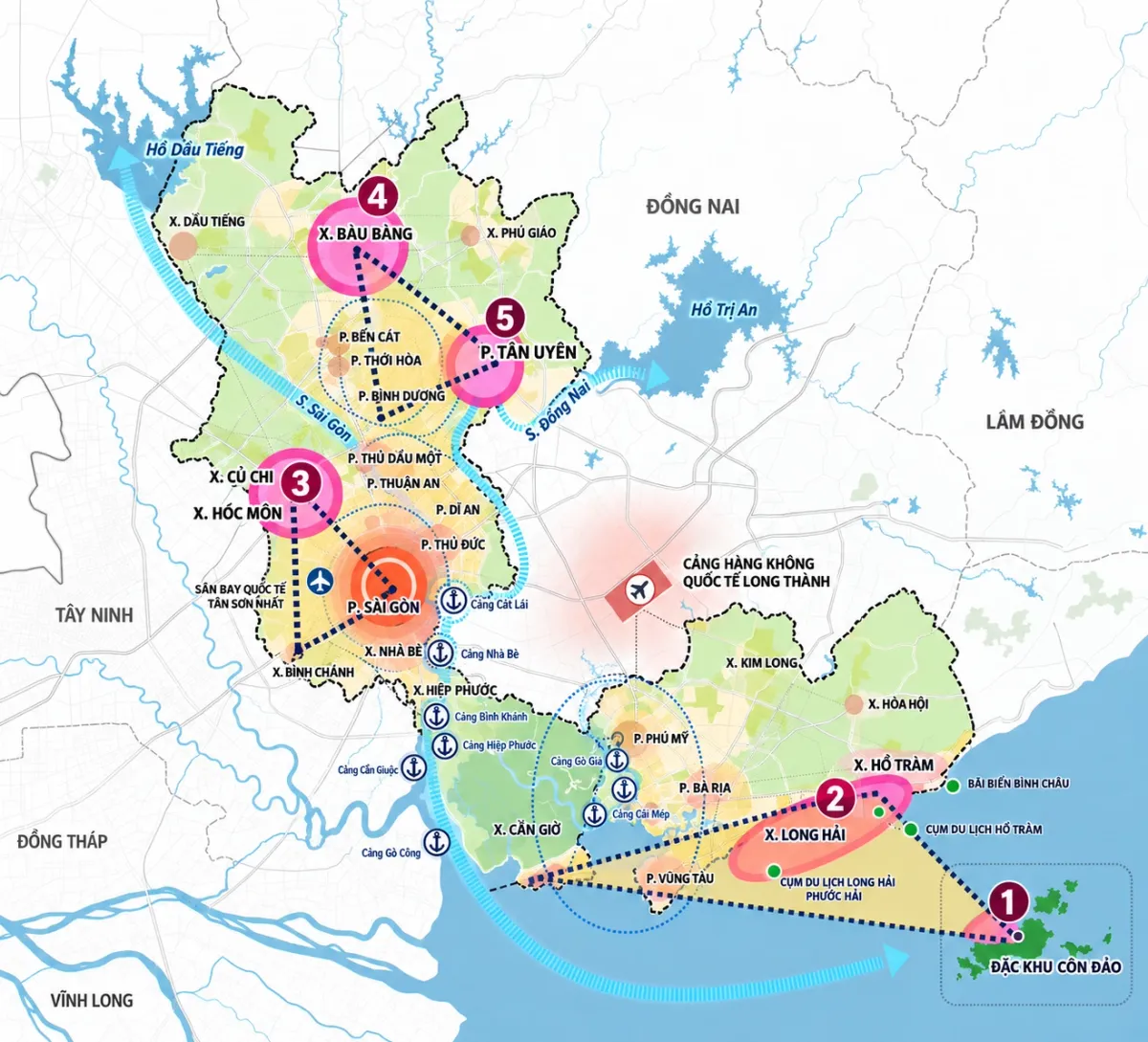
The five satellite centers of Ho Chi Minh City according to the master plan for the 2025–2050 period, with a 100-year vision (Photo: Consulting firm)
Five key growth poles shaping a new development landscape
Among these five growth poles, the Saigon – Cho Lon – Thu Thiem area is oriented toward the development of international financial services; the eastern pole focuses on innovation; the northern pole is geared toward industry and logistics; the southern pole is linked to seaports, free trade zones, and the energy industry; and the western pole is focused on urban development, education, and healthcare.
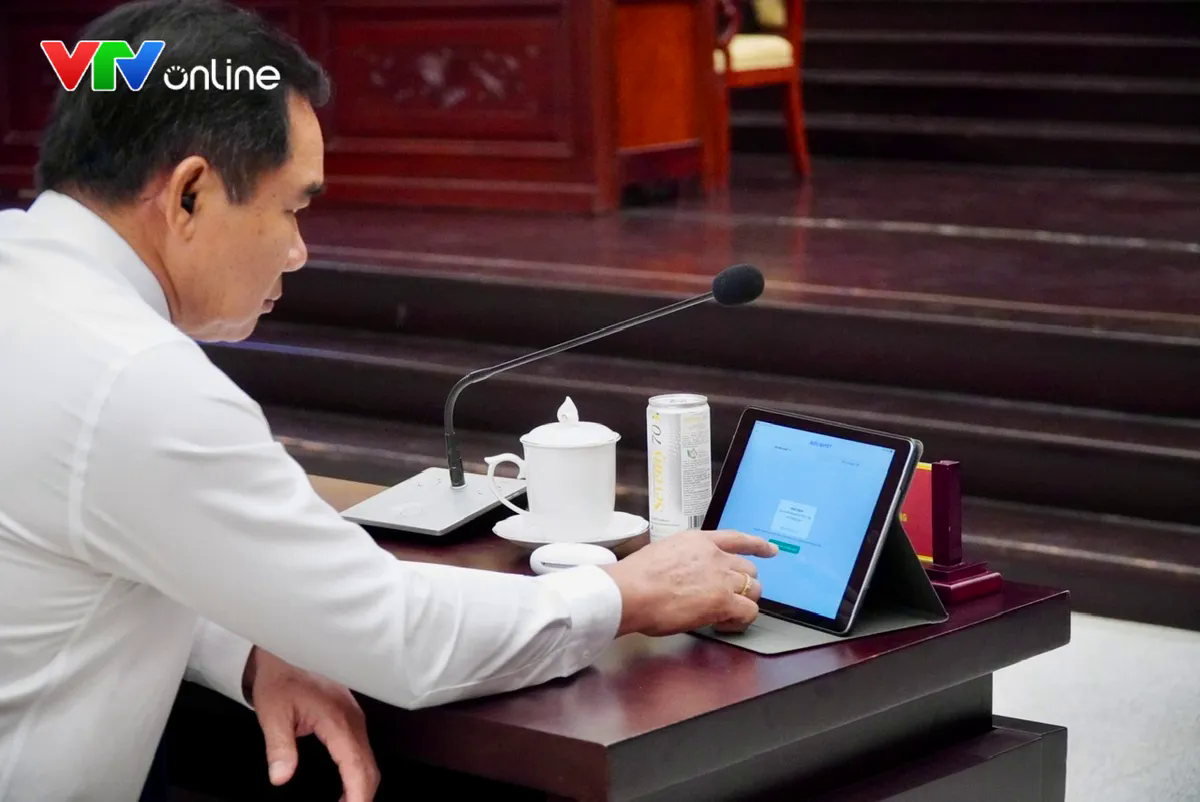
Delegates vote to approve the master plan for Ho Chi Minh City with a 100-year vision (Photo: Thu Trang)
During the discussion session, delegate Tran Thanh Trong proposed including Binh Duong Ward in “Growth Pole No. 2.” He argued that the area possesses favorable conditions for integration into the city’s science and technology development landscape—such as the presence of a university, an exhibition center, and a metro station connecting it to other parts of the city. Including Binh Duong Ward in Growth Pole No. 2 would enable better concentration of investment resources, foster innovation, and increase the scientific and technological content of operations for businesses and establishments located there. Acknowledging the delegates’ input, Chairman of the City People’s Council Vo Van Minh suggested considering a name change for this growth pole to “East–Northeast” and incorporating Binh Duong Ward into the development strategy.
Regarding the industrial and logistics hub in the northern part of the province, Vo Van Minh proposed removing Thu Dau Mot from the list of areas designated for industrial functions. He noted that while Thu Dau Mot—the former central urban area of Binh Duong—still hosts industrial activities, it is no longer a primary area for this function within the long-term vision. As for the western urban, educational, and healthcare hub, the Chairman of the Provincial People’s Council emphasized the need to ensure that land reserves are commensurate with the established development orientation.
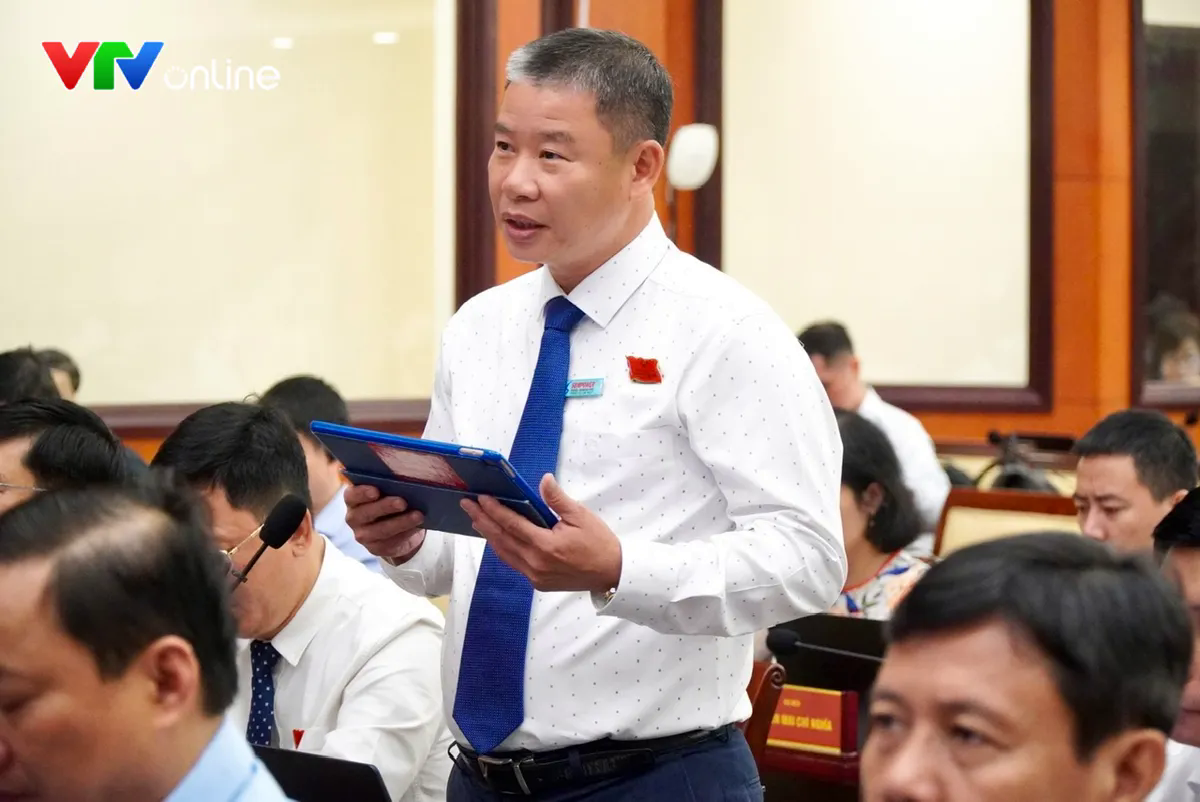
Delegate Tran Thanh Trong proposed including Binh Duong Ward in growth pole No. 2 (Photo: Thu Trang)
For the Hoc Mon – Cu Chi area, development is oriented along the Saigon River corridor, National Highway 22, and the Ho Chi Minh City – Moc Bai Expressway, with connections to Ring Roads 3 and 4. However, the North-South transport axis—stretching from Tan Son Nhat Airport, crossing National Highway 1, and extending toward Tay Ninh—currently suffers from congestion. The city needs to continue refining this axis, explore connecting the Ho Chi Minh City – Moc Bai Expressway to National Highway 1, and consider an additional transport route running parallel to the Saigon River in this area.
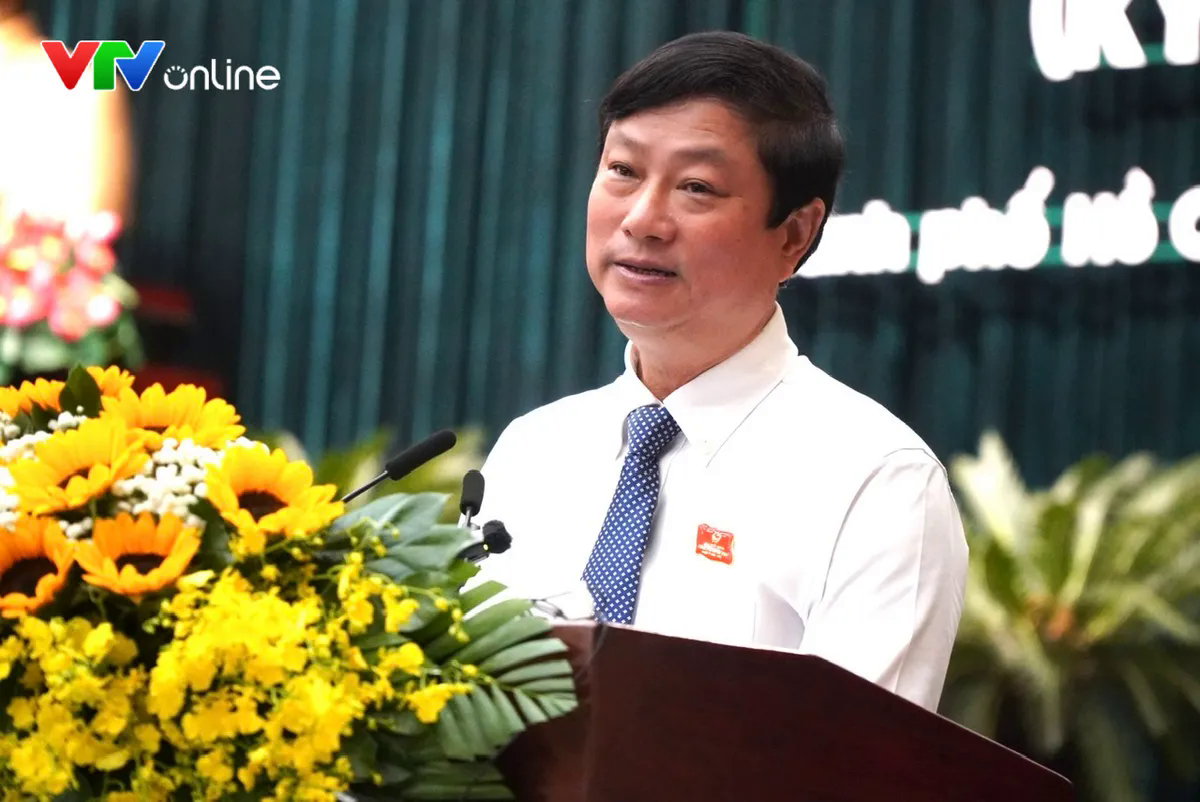
Chairman of the Ho Chi Minh City People’s Council, Vo Van Minh, speaks during the discussion session (Photo: Thu Trang)
Regarding industrial space, the Chairman of the City People’s Council noted that industry currently accounts for over 30% of the economic structure; therefore, the master plan must continue to allocate appropriate land for this sector. In the energy sector, it is essential to rigorously review locations for offshore wind power development, ensuring alignment with marine spatial planning, maritime shipping lanes, tourism activities, and electricity export capacity. As for floating solar power, careful consideration must be given to the selection of reservoirs and water surfaces to avoid any negative impact on the landscape of rivers and lakes or on tourism.
Connecting satellite hubs and mobilizing resources for implementation
An issue directly related to implementation—raised by delegate Nguyen Anh Tuan during the session—concerns the responsibility for providing guidance, direction, and coordination among the wards and communes situated within the 10 designated development management zones. The delegate argued that these local jurisdictions require specific guidance to collectively carry out the 100-year master plan, rather than merely having these zones delineated on a map.
According to delegate Nguyen Anh Tuan, local jurisdictions need specific guidance to implement the master plan (Photo: Thu Trang)
Explaining this, Chairman of the Ho Chi Minh City People’s Committee Nguyen Van Duoc stated that the approval of the master plan by the People’s Council is merely the first step. The crucial next phase involves translating these strategic orientations into concrete programs, action plans, project portfolios, and the allocation of implementation resources. The city will align this rollout with its public investment plan, while mobilizing private capital and leveraging public-private partnership (PPP) mechanisms. Priority will be given to infrastructure projects with high spillover potential—such as inter-regional transport networks, urban rail systems, transit-oriented development (TOD), logistics, digital infrastructure, energy, and ecological infrastructure. These projects must be integrated with production zones, seaport services, and logistics hubs, thereby enabling growth poles and satellite centers to effectively fulfill their roles within the city’s overall spatial framework.
The Chairman of the City People’s Committee also emphasized the need to enhance implementation capacity by clearly defining the responsible agencies, specific tasks, deadlines, required resources, and expected deliverables. Regarding public investment, the city must focus on resolving obstacles related to administrative procedures, site clearance, the supply of materials, and payment processes. For projects experiencing delays, the underlying causes and the parties responsible must be clearly identified; furthermore, projects deemed incapable of timely disbursement should be considered for the reallocation of funds. As for private investment, relevant agencies must proactively support investors by categorizing the challenges faced by each project and developing targeted solutions to address them.
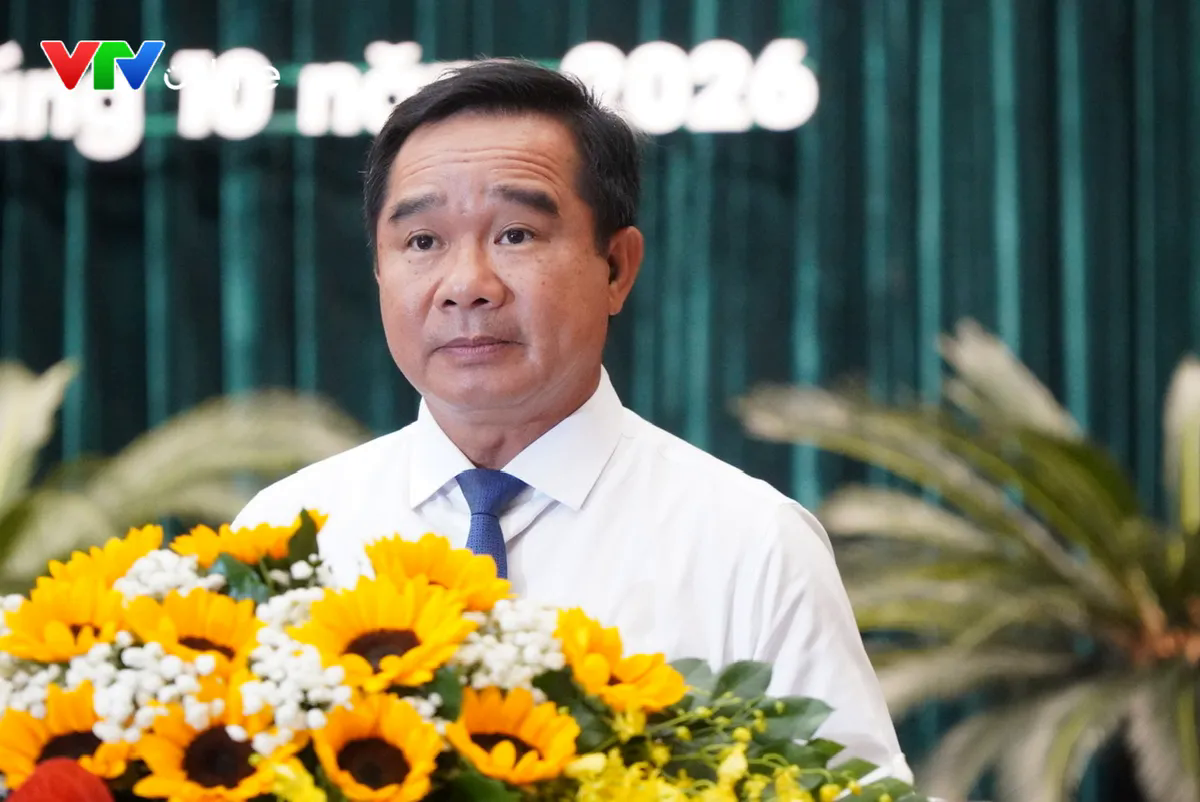
Chairman of the Ho Chi Minh City People’s Committee Nguyen Van Duoc provides information on the implementation plan following the People’s Council’s approval of the master plan (Photo: Thu Trang)
Concluding the discussion, Chairman of the City People’s Council Vo Van Minh emphasized that the finalization of the planning documentation must fully incorporate feedback from relevant ministries, sectors, and specialized agencies. The city must ensure that the planning output is of high quality and legally sound; the quality must not be compromised due to time constraints.
It is expected that this November, the Chairman of the Ho Chi Minh City People’s Committee, Nguyen Van Duoc, will exercise his authority to review and approve the implementation of the plan.