The Ministry of Construction is seeking broad public opinion on the draft Decree on the management of construction materials, intended to replace Decree No. 09/2021/ND-CP. With a structure comprising 4 chapters and 21 articles, the new draft not only addresses existing shortcomings but also creates a breakthrough legal framework to promote the construction materials industry’s shift towards green, circular, and digital transformation.
Review, update, and address any shortcomings.
Based on the Construction Law No. 135/2025/QH15 and related laws, the Ministry of Construction is drafting a Decree on the management of construction materials to replace Government Decree No. 09/2021/ND-CP dated February 9, 2021, on the management of construction materials.
The draft Decree not only addresses shortcomings in practical implementation but also creates a comprehensive legal framework, guiding the development of the building materials industry towards a green, circular, low-emission direction, based on science, technology, innovation, and digital transformation.
The Ministry of Construction has determined that the issuance of a Decree on the management of construction materials, replacing Decree No. 09/2021/ND-CP, is an essential requirement in the current period. The legal system related to construction, investment, environment, science and technology, technical standards and regulations, product and goods quality, etc., has undergone fundamental changes, requiring a comprehensive review, updating, and institutionalization in the field of construction material management.

The practical implementation of Decree No. 09/2021/ND-CP shows that, although it has created an important legal framework for state management of construction materials, contributing to enhancing the responsibility of management agencies and promoting the development of some new and green materials, many obstacles still exist.
The classification and cataloging of building materials do not fully encompass all new material groups; strategies and plans for the development of building materials at the central and local levels lack uniformity; and the database is not organized in a way that is shared and interconnected, making it difficult to monitor and forecast the market.
Furthermore, local imbalances, shortages, and price fluctuations of construction materials in some localities, especially for common materials and leveling materials serving key national projects, have created an urgent need to improve forecasting capabilities, information transparency, and refine state management tools.
In this context, the draft of the new Decree is being developed to meet the management requirements in the new development phase of the building materials industry.
Completing regulations for the management and development of building materials
The draft Decree on the management of construction materials consists of 4 chapters, 21 articles, and 1 appendix. It inherits the relevant provisions of Decree No. 09/2021/ND-CP; while amending, supplementing, and standardizing the contents to conform with the Construction Law No. 135/2025/QH15 and related legal systems; addressing shortcomings and limitations in the implementation of Decree No. 09/2021/ND-CP; and meeting the requirements for the development of construction materials in a green, circular, low-emission direction based on science, technology, innovation, and digital transformation.
One of the key aspects of the draft is the refinement of regulations on the Central Government’s Strategy for the Development of Construction Materials and the Local Government’s Plan for the Development of Construction Materials. Accordingly, the draft clarifies the leading responsibilities of the Ministry of Construction, the inter-sectoral coordination mechanism, and adds requirements for integrating environmental protection, energy conservation and efficiency, technological innovation, and the elimination of outdated technologies.

Regarding the local construction materials development plan, the draft standardizes the content, documentation, and procedures for preparation and approval, aligning it with construction investment needs and local and regional/inter-regional supply conditions. Notably, the draft does not establish a supply-demand coordination mechanism in the sense of administrative intervention, but focuses on forecasting, early warning, information transparency, and enhanced coordination among state management agencies according to their assigned functions and tasks.
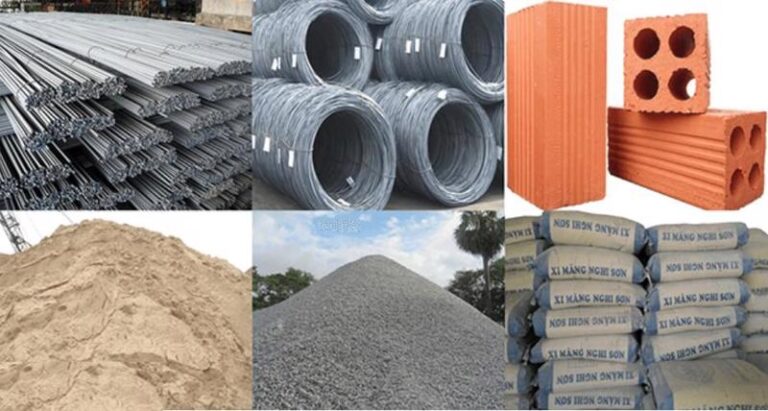
In addition, the draft supplements and standardizes the terminology system and list of building materials, clarifying new material groups and priority materials for development such as lightweight, environmentally friendly, low-emission materials, and materials suitable for coastal and island conditions. This is an important basis for developing and applying technical standards and regulations, managing quality, and implementing incentive and preferential policies in practice.
Promoting green, circular building materials and digital transformation.
A key highlight of the draft Decree is the orientation for the development of the building materials industry towards a green, circular, and low-emission growth model. The draft has systematized policies to encourage and incentivize research, investment, production, and use of new, green, recycled, smart building materials that are suitable to specific conditions.
These policies are regulated according to the principle of referencing, ensuring consistency with laws on investment, taxation, land, credit, environmental protection, science and technology, public procurement, and bidding, avoiding overlaps and the creation of unnecessary administrative procedures.
The draft also continues to emphasize the circular economy principle in the recovery, recycling, treatment, and use of waste as building materials; promoting the use of fly ash, slag, gypsum, and industrial by-products as raw materials for building materials production when technical and environmental requirements are met. This is an important content aimed at institutionalizing the Prime Minister’s directives, contributing to reducing environmental pressure and improving the efficiency of resource use.

In particular, the draft Decree adds regulations on science, technology, innovation, and digital transformation in the development of building materials. Accordingly, the construction, management, and exploitation of a national database on building materials is identified as an important tool to improve the effectiveness and efficiency of state management, support businesses and the market, and enhance the ability to monitor, forecast, and provide early warnings about the supply of building materials.
The database on construction materials will be integrated into the national information system and database on construction activities, ensuring shared and interconnected data, avoiding duplication, and enhancing market transparency. The responsibilities of localities and businesses in providing and updating information are also clearly defined, linked to the requirements of decentralization, delegation of authority, and accountability.
With the above contents, the draft Decree on the management of construction materials is expected to create a synchronized, stable, and transparent legal framework, meeting the requirements of state management in the new period; and at the same time, guide the transformation of the growth model of the construction materials industry towards green, circular, low-emission, and science-, technology-based, innovation-based, and digital transformation-based growth.
Jounal of constuction | Ngoc Ha | Translated by VIFUCO admin | 29/01/2026